Lock-Top Chimney Damper
We Install Quality Chimney Dampers Throughout Boston & Beyond If you’re still equipped with a traditional throat damper, then you’re likely familiar with some other things too – namely rust, the screech of a metal-on-metal seal, and a drafty chimney....Winter Maintenance Tips for Your Home
There are many issues that can arise during the winter months—things that affect the bills you pay and the safety of your home. The problems that affect your home this winter are not always caused by your fire appliance, your heater, or even neglect. Many problems arise because of weather, storms, damage, or other things entirely out of our control. In order for our customers to have the safest home possible this winter and every winter, we recommend these tips.
Gutters and Drains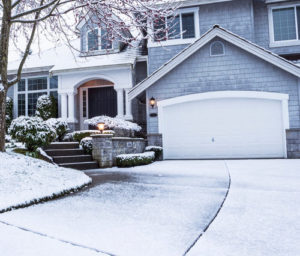
Gutters and outside drains are great assets during freezing winters and wet springs. However, if they aren’t properly maintained, they can become a hazard. Leaves and debris left inside gutters and drains can cause a clog, allow your water flow to stall and freeze, and even lead to leaks and water damage outside the gutter system. A gutter problem doesn’t just affect the roof, eaves, and house. An overflowing or damaged gutter can lead to washout and damage to your landscaping and direct rainwater to your basement and foundation instead of designated drainage areas.
Weatherizing Windows
The only windows that do not need to be weatherized are those that are double-pane storm windows. There are specific models and brands of windows that will insulate your home despite the outside weather and temperature, but these windows are expensive and not usually in older homes. If you have a standard single-pane window, it should be properly winterized in order to save you money and prevent damage.
Screen Removal – If your windows have an outer screen, the screen should be removed during winter prep. Leaving the screens in the window can allow water to pass through the screen and then freeze against the window and the window sill. This not only leads to a temperature drop but also can ruin a wooden window frame and sill. Remove the screen and store upright in a storage closet, basement, or attic.
Storm Window Panes – If your single-pane windows have a screen, look around the basement and attic for replacement storm windows. These panes slip right into the space where the screen is removed. If your windows do not have storm window panes, remove the screen and plastic over your windows for insulation.
Window Insulation – Whether you have storm windows or simple single-pane windows, you can still add clear plastic insulation to your windows to help keep the cold out and keep your warm air in. You can hire someone to winterize your windows or purchase a window insulation kit at your local home improvement store to improve your home’s heat efficiency.
Lawn Maintenance
By the end of summer, we are excited to be finished with lawn care. We’re excited for the leaves to begin falling and celebrate as we put that weed trimmer and lawnmower in the shed for the winter. While we as homeowners are understandably finished with lawn care when autumn arrives, it’s important to trim your lawn before winter is in full force. Oftentimes, the grass stops growing, so we fail to cut it one last time. This makes raking more difficult when necessary and can hide hazards beneath high grass and then snow as fall turns to winter and winter to spring. Cutting your grass before winter arrives will mean a seamless transition back to spring and summer and will mean a healthier lawn and healthier microorganisms that help cultivate healthy soil.
Air Duct and Dryer Vent Maintenance
During winter months, we use air ducts and dryer vents more often than other times of the year. You may not even realize it, but you are likely spending more time than ever indoors, breathing recycled air that has been moving through your HVAC system over and over. You are also likely using the clothes dryer more often than in warmer months if you use a clothesline during the warmer months.
Whatever the reason, these systems are being used, and are oftentimes neglected. In order for a more efficient and safer central air and heating system, make sure you have your air ducts cleaned and sanitized as needed. When the system is maintained properly it will use less energy, will cycle and filter the air in your home better, and will last longer. Similarly, the clothes dryer vent will work better when it is cleaned annually. Not only will a clean dryer vent keep your family safe this winter, but it will help your dryer work better, work safely, use less energy, and last longer. Running your dryer multiple times for one load of clothes is a sign that there is a problem—and it’s a sign that costs you money! Schedule dryer maintenance now and see how much it saves you.
Chimney and Fireplace Maintenance
Homes that have a fireplace and chimney system are safer when they are maintained properly. Don’t take our word for it! The Chimney Safety Institute of America (CSIA) and the National Fire Protection Association (NFPA) both agree that the safest and most efficient chimney systems are those that are cleaned regularly and inspected annually. Ideally, a homeowner would schedule these important services before the burn season, but it isn’t too late.
Residents in Boston, North Shore, and Portland area can call and schedule a sweep or inspection with Billy Sweet Chimney Sweep anytime, year-round. Our aim is to make safe homes and warm hearths. Dial 617-469-4528 or contact us online.
The Difference Between Gas Inserts and Gas Logs
So you think you have a gas fireplace? It is fairly simple to figure out whether your fireplace burns gas or not. First, there is not an empty space for logs and fire-building in your firebox. Instead, you’ll find logs—usually ceramic. Your system will be connected to a gas line of some kind and will have an ignitor and pilot light. This is a gas fireplace. What type of gas fireplace you have can be slightly more difficult to figure out. If you don’t have your owner’s manual, it is important to determine what type of system you have. Using the system according to its design is important for safety and efficiency as well as convenience.
 Types of Gas Appliances
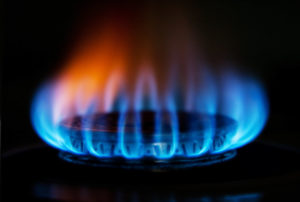
Gas is a fuel type that is always growing in popularity due to its convenience and versatility as well as efficiency and cost. You may be able to use gas in any room in your house, but your venting and your space will determine what type of appliance is best for you.
- Gas Stoves – Like all other types of stoves, a gas stove can be freestanding anywhere in a room. It can fit into a corner, in an existing firebox, on any story, and in any sized home or apartment. A professional can install a gas stove anywhere using appropriate refractory materials.
- Gas Fireplaces – A gas fireplace can be accomplished by installing a gas log set into an existing firebox, or installing a manufactured insert into a wall or firebox. Your professional chimney sweep can help you determine which type of gas fireplace is best for your home, your style, and your need.
Gas Inserts V. Gas Logs
Perhaps you don’t have the space for a gas stove or you simply like the appeal of a fireplace more, you can get the same benefits from a gas log set or insert. If your gas fireplace is set into a wall or hearth, it is likely one or the other. If it has glass doors, ceramic logs, and no visible ash or creosote residue, you’re looking at a gas insert or gas log set—not a wood-burning fireplace.
Identifying a Gas Insert
A gas insert is a closed unit, like a stove, but looks like a fireplace. It is retrofitted into an existing firebox or installed directly into a wall. A gas insert may have ventilation that is hidden. It may vent through the ceiling or wall and many draw air the same way, leaving the air in your home undisturbed. A direct vent insert, for instance, has a pipe that draws air in from the outside to help the fire burn. Inside this pipe is the actual flue that vents the toxins from the fire. This allows there to be only on vent and means the air inside the home is continuously cycled and heated and deposited back into the home.
- A gas insert is retrofitted into a traditional masonry fireplace
- A gas insert produces radiant heat and warm air
- A gas insert will often have doors or a closed glass front
- Logs in a gas insert are sometimes rearrangeable (for aesthetics)
- Gas inserts are made with a metal firebox
Identifying a Gas Log Set
A gas log set is convenient for people who would like a fireplace but don’t need it to produce a lot of heat. Gas logs use gas for fuel, but don’t cycle air from the room and continuously heat it. Some gas log sets feature detailed ceramic logs and others are very simple. Some require a vent and others do not. Gas log sets are cheaper than inserts and ideal for converting from a wood-burning fireplace without a lot of costs.
- A gas log set will sometimes have a blue flame
- Gas logs are removable (for cleaning) but have a specific order for optimal use
- Gas logs require an existing fireplace
- Gas logs are usually installed in a masonry fireplace with no special wall or floors
Know Your System for Safety
Part of knowing your system is identifying what type you have but also locating the model number so that you can use it properly. Generally, gas appliance work in the same way—using gas and an ignitor the fire lights, and continuous fuel and airflow allows it to maintain a flame. The toxins produced by the fire are then vented out a flue or if it is a vent-free log set or insert it will require no ventilation and all the heat and moisture from the fire comes into the living space. Using a vented fireplace with no vent is dangerous and can cause permanent injury or death.
If you’re not sure whether your fireplace should be vented or not, it is imperative that you locate the model number and user guide before lighting it. If you cannot locate your model number or user manual, a professional can do this during a standard gas service appointment.
Schedule a fireplace maintenance appointment with Billy Sweet Chimney Sweep and we can help you identify your fireplace. When one of our fireplace experts complete the job, you can rest assured you’re using your fireplace properly and safely.
Call us today at 617-469-4528 if you live in and around Boston.
Call our North Shore number: 781-593-2333.
Call our Portland area number: 207-773-7933.
Keep Your Fire In Its Place This Winter
During the season of fuel and fires, ventilation and maintenance, it’s important to not cut corners. Cutting corners when it comes to your fireplace and chimney can result in serious damage to your home, costly services to your chimney system, and even injury and possible loss of life. In order for your chimney to work safely and efficiently all winter long and year after year, it must be maintained properly and used correctly. The National Fire Protection Association (NFPA) and the Chimney Safety Institute of America (CSIA) help to keep fire in its place by educating responsible homeowners to schedule routine chimney sweeps and annual chimney inspections. This ensures the safest and most efficient systems.
The Danger of Dirty Chimneys
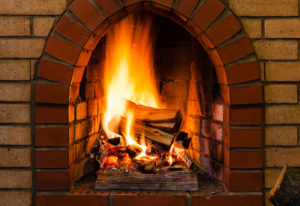 When a fire burns in your fireplace it constantly produces soot and creosote and deposits them into the chimney flue. Soot is merely carbon, harmless unless it’s allowed to buildup and cause an obstruction. Creosote is produced when organic materials are burned and is made up mostly of tar, a sticky, flammable substance. It builds upon itself until a significant buildup occurs, slowing the flow of air through the flue. As efficiency drops, the buildup worsens and hot air begins to stall in the system. As temperatures increase, the creosote boils and the water evaporates leaving a concentrated, hardened mass when the creosote cools. This buildup called “glazed creosote” is highly flammable, obstructs airflow, and is difficult to remove. Because of this, creosote should be removed before it reaches 1/8 inch in thickness. A standard chimney sweep can remove creosote, but glazed creosote requires a special industrial solvent that transforms the creosote as it’s absorbed.
Creosote buildup is not the only danger of a dirty chimney. If your chimney isn’t cleaned on a regular basis the creosote and soot can hide liner damage, allowing the heat to transfer through the masonry and onto the other building materials of the home. This can create a serious fire hazard. Additionally, without a routine sweep, you might have accumulated any number of things in your flue or fireplace. Animals, sticks and leaves, and unburned wood are all things that we find in neglected chimney systems—all contributing to unwelcome odors and ventilation problems.
The Importance of Inspections
It’s so important to have your chimney inspected as well as cleaned that most chimney companies include a basic level one inspection with every cleaning! An inspection will ensure that the system is safe and efficient for another year of use. However, who completes the inspection is vital. Only a certified chimney sweep should inspect your chimney system. An amateur won’t know where to look and a homeowner won’t recognize the signs of a problem until it’s too late. Every chimney should undergo a CSIA inspection annually. This is a complete diagnostic assessment of the chimney from top to bottom. Billy Sweet Chimney Sweep offers level one, two, and three CSIA inspections for homeowners in and around Boston, North Shore, and Portland. Not only do we inspect every chimney that we sweep, but we sweep every chimney we inspect.
If your chimney system hasn’t changed or shown any problems in the last year, our technician will complete a level one inspection. This is an inspection of all the readily accessible portions of the system. The video scan is usually only available for a level two inspection, but we check every chimney with video surveillance. We use a Chim-Scan camera system and Wohler Vis2000-Pro for an inside look at the flue.
A level two inspection is necessary in the following conditions; if there have been changes made to the chimney system, if it’s presented problems, and before the sale or transfer of the property. It includes everything from a level one inspection as well as everything accessible through doors and passageways.
A level three inspection is only necessary when a serious hazard is suspected, but at this point, it is the only thing to get your system up and going again.
Common Chimney Dangers
Besides creosote buildup, there are numerous problems that can arise when a chimney isn’t properly cleaned and maintained. At Billy Sweet Chimney Sweep we diagnose winter damage most often—masonry damage that results in a serious drop in efficiency and rise in fire risk. Another common hazard that we see quite often is a damaged firebox. The firebox is the space that holds the fire. It endures the highest temperatures for the longest amounts of time but gets very little attention. Though many focus only on flue fires, the fire hazard associated with a damaged firebox may be the most serious. Prolonged heat exposure through damaged firebricks can cause structural damage as support beams become brittle with heat damage. A similar danger can arise when the liner is damaged and heat transfers through the masonry. Insulation in walls and attics can ignite as heat moves from the chimney into the home.
As with most residential fires, chimney and fireplace fires can be prevented. It is our goal to help our customers, friends, and neighbors in our service area to stay safer and warmer this winter by offering services that prevent fires.
Schedule your services now by calling 617-469-4528 or schedule an appointment online today.