
What Are Early Warning Signs That a Chimney Needs Repair?
Knowing when to call for help can prevent major headaches later. If you notice:
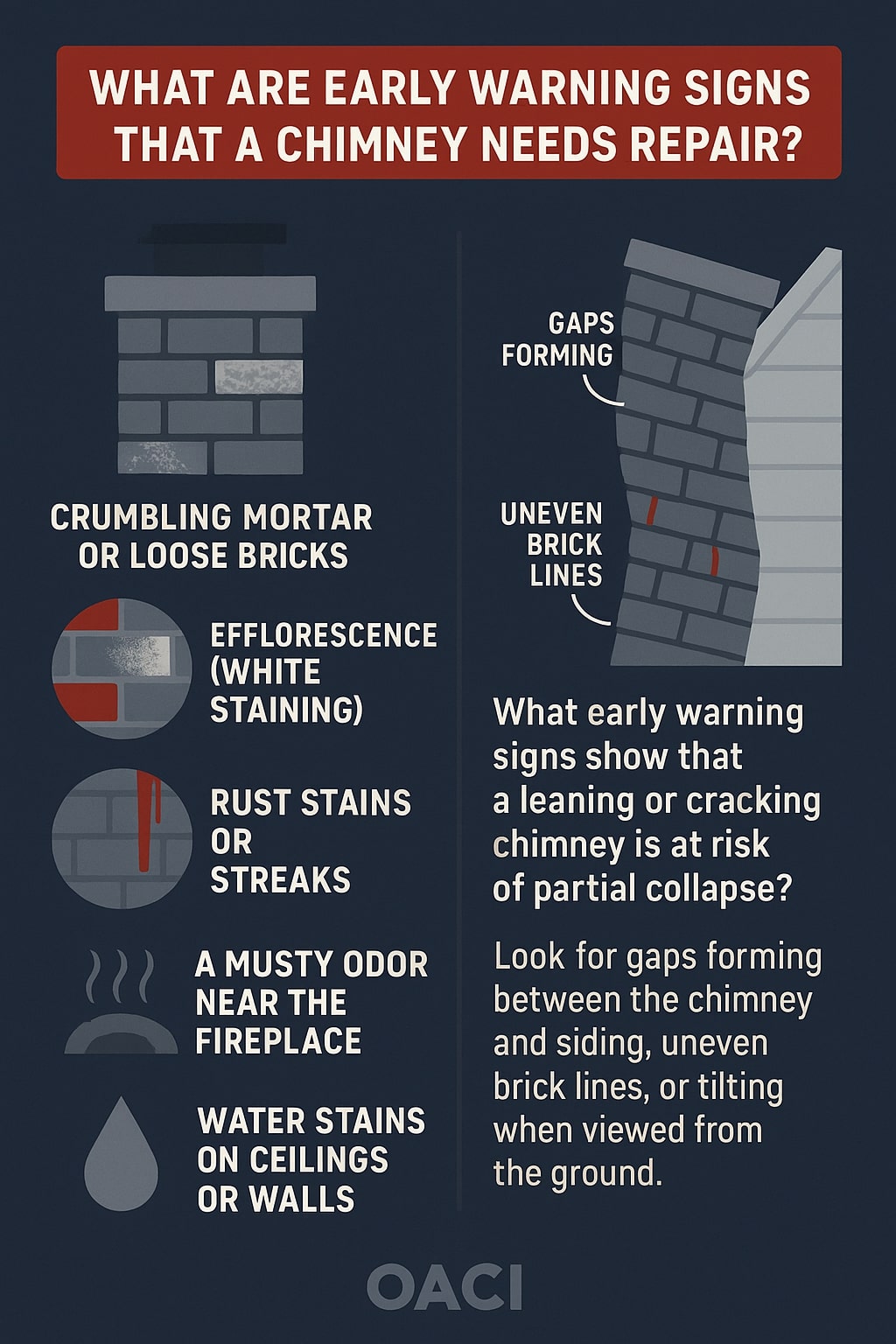
- Crumbling mortar or loose bricks
- Efflorescence (white staining)
- Rust stains or streaks
- A musty odor near the fireplace
- Water stains on ceilings or walls near the chimney
…then it’s time to schedule an inspection. These are often the first signs of internal decay.
What early warning signs show that a leaning or cracking chimney is at risk of partial collapse? Look for gaps forming between the chimney and siding, uneven brick lines, or tilting when viewed from the ground. A leaning chimney isn’t just a cosmetic issue… It may indicate a failing foundation that’s putting your household at risk and needs immediate attention.
What Are the Most Common Chimney Problems in Quincy Homes?
Chimneys in Quincy face unique challenges from salt air, coastal humidity, and frequent freeze/thaw cycles. Over time, these conditions can take a toll on masonry and metal components.
Some of the most common problems we repair include:
- Cracked crowns and caps that allow water to penetrate the system.
- Deteriorated mortar joints caused by seasonal expansion and contraction.
- Leaking flashing where the chimney meets the roof.
- Spalling or flaking bricks from trapped moisture and freezing temperatures.
- Damaged flue liners that compromise safe venting.
Even small cracks can worsen quickly in New England’s shifting weather, so we always recommend addressing damage early.
How fast can crumbling mortar compromise a chimney’s stability? Could it really collapse in just one season? In some cases, yes. If water infiltrates deep enough to weaken the base structure, sections of the chimney can loosen or lean rapidly.
What Causes Chimney Leaks & How Do You Fix Them?
Chimney leaks are one of the most common calls we receive from Quincy homeowners. A leak might start small (just a few drops in the firebox or damp walls nearby), but it can quickly lead to interior rot or mold growth.
We start by identifying the source of the leak. Common culprits include cracked crowns, missing chimney caps, rusted flashing, or porous masonry. Once we pinpoint the issue, we use waterproofing treatments, new flashing, or structural repairs to seal out moisture and protect against further intrusion.
After a heavy rain or nor’easter, it’s especially important to inspect your chimney. What happens if you light a fire when the flue is still damp? The moisture can mix with soot and creosote to form acidic residue that eats away at your liner. That’s why our team ensures every repaired chimney is properly dried and sealed before use.
How Does Freeze/Thaw Weathering Affect Chimneys in Coastal Massachusetts?
Few things age a chimney faster than repeated freezing and thawing. In Quincy, where winter storms and cold snaps are common, this natural cycle can be harsh on masonry. When water seeps into tiny cracks, it expands as it freezes, gradually widening those gaps and breaking down brick faces over time.
To slow this deterioration, we recommend applying professional-grade waterproofing that allows your chimney to breathe while repelling moisture. Regular inspections also help catch damage before it becomes severe. Does freeze/thaw weathering accelerate deterioration in colder climates, and can waterproofing truly slow it down? Absolutely. We’ve seen chimneys last decades longer simply because the right protective coatings were applied early.
Can Coastal Air & Salt Damage Masonry Chimneys?
Yes. Quincy’s seaside climate means chimneys are regularly exposed to salt-laden air, which accelerates corrosion and deterioration of metal components like flashing, caps, and dampers. The salt can also draw moisture into brick and mortar, hastening the breakdown of the outer surface.
To counteract this, we use corrosion-resistant materials and apply water-repellent treatments specifically designed for coastal conditions. We often recommend stainless steel or copper for caps and liners because they hold up better in the long term.
About Quincy, MA: A City of History and Coastal Charm
Known as the “City of Presidents,” Quincy has deep roots in American history as the birthplace of John Adams and John Quincy Adams. Today, residents enjoy a blend of coastal beauty and urban convenience. You can explore the Adams National Historical Park, stroll the scenic Quincy Shore Drive, or visit Marina Bay for dining and waterfront views. Whether you live in a historic colonial home near Wollaston or a newer build in the Houghs Neck neighborhood, we’re proud to help you preserve your home’s comfort and safety through reliable chimney care.
Call Billy Sweet Chimney Sweep for Chimney Repairs in Quincy, MA
At Billy Sweet Chimney Sweep, we’re dedicated to helping Quincy homeowners protect their homes from water damage, structural decay, and fire hazards. Our certified technicians bring years of experience and advanced restoration techniques to every repair.
Don’t wait until small cracks become major rebuilds. Call today to schedule your chimney repair or inspection, and let our team restore your system’s strength and performance, so you can enjoy your fireplace with peace of mind all year long.