Why We Love Serving East Boston MA
East Boston is one of the most vibrant, historic, and scenic neighborhoods in the city. With waterfront parks, incredible skyline views, and a welcoming community, it’s clear why homeowners love living here. Some highlights we enjoy include:
- Piers Park with its stunning harbor views
- Constitution Beach, a favorite for families and summer relaxation
- The neighborhood’s aviation history near Logan International Airport
- A wide variety of unique local eateries and shops along Meridian and Bennington Streets
- Beautiful older architecture mixed with modern developments
We’re proud to serve this community and help keep East Boston homes warmer and safer during the cold New England months.
How Do Storms, Moisture, and Freeze–Thaw Cycles Affect My Chimney?
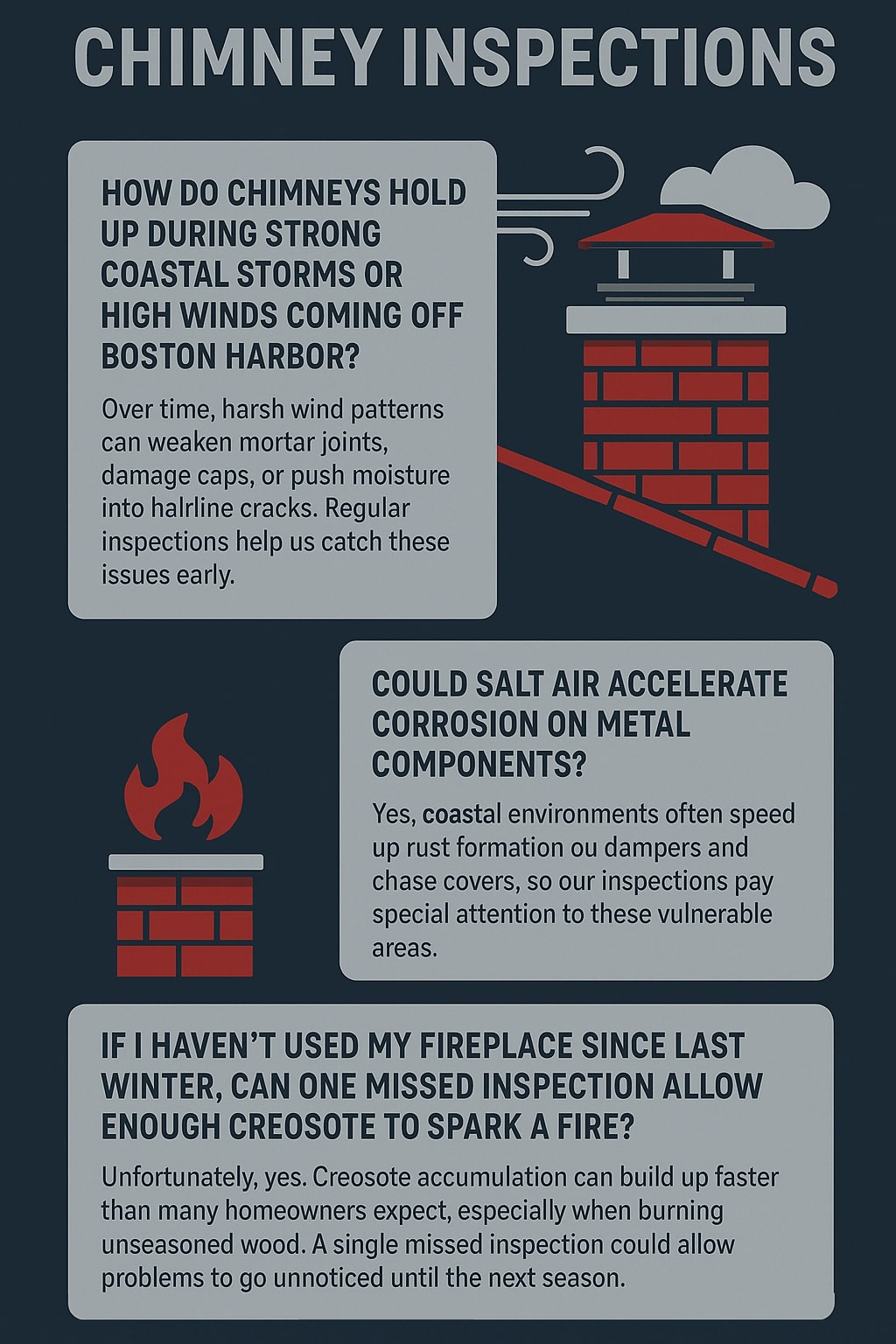
Chimneys in East Boston face harsh weather challenges that speed up wear and tear. Between nor’easters, fluctuating temperatures, and salt-heavy air, many parts of the chimney experience added stress. During inspections, we look closely for moisture-related warning signs. Key issues we address include:
- Freeze–thaw expansion that widens cracks each winter
- Spalling bricks caused by moisture trapped beneath the surface
- Efflorescence, which indicates long-term water absorption
- Rust on dampers, caps, and metal components due to coastal air
- Interior flue decay that’s not always visible from the outside
Homeowners also wonder:
- How fast can crumbling mortar compromise stability? In severe weather, deterioration can accelerate in a single season.
- Can lighting a fire when the flue is damp cause damage? Rapid steam expansion can stress the liner and disrupt draft.
We take these factors seriously and help homeowners plan preventative steps that keep masonry and liners in better condition year-round.
What Should Homeowners Do After Flooding, Heavy Rain, or Snow Melt?
East Boston’s coastal location exposes it to flooding, storm surges, and rapidly melting snow. After significant water events, many homeowners wonder whether their fireplace is still safe to use. Our answer is simple. Don’t use it until a professional has inspected it.
Moisture inside a chimney can cause interior metal components to rust faster than normal, soften masonry, and lead to hidden flue gaps. After a storm, we check for water pooling in the smoke shelf, damp or crumbly mortar, and dark staining on exterior bricks.
Another common concern is whether earthquakes or tremors can loosen mortar joints. While Massachusetts doesn’t see major seismic activity, small tremors can shift older chimneys enough to create tiny gaps. We use tools, cameras, and tactile inspection methods to detect microscopic cracks that homeowners can’t see from the outside.
If floodwater reached your basement or first floor, it may have affected the base of your chimney structure. Moisture-wicking can pull water up through the masonry, weakening it from the inside. Our inspection ensures your system is fully dry and structurally sound before you light another fire.
We also explain how leaves, pollen, and winter ice can create blockages long after the storm has passed. Blockages disrupt draft, cause smoke to spill into the living space, and can increase creosote formation. That’s why post-storm inspections are one of the most important services we provide.
Can Changes Around My Home Affect Chimney Draft?
Yes. Even years after construction, outside changes can impact draft and airflow. East Boston continues to grow and evolve, and even small changes can make a difference. Factors that commonly affect draft include:
- New buildings that alter wind patterns
- Home additions or roof height changes
- Mature trees growing above roofline
- Narrowing flues caused by creosote or debris
- Interior moisture or temperature shifts
A chimney relies on pressure differences to move smoke upward. If a new structure blocks wind patterns or alters airflow, your chimney may start backdrafting for the first time. Draft can also struggle if your flue narrows due to creosote buildup or interior deterioration.
Another question homeowners raise is whether burning different fuels affects sweep frequency. Wood produces creosote most rapidly, especially if it’s not fully seasoned. Pellet stoves generate fine ash that can accumulate quickly inside pipes. Gas appliances don’t create creosote, but they can still clog with debris or develop condensation issues that corrode liners. During inspections, we evaluate which fuel you use and recommend a maintenance schedule that fits your appliance and lifestyle.
If you ever notice slow-starting fires, smokiness, or unusual odors, these are signs your chimney draft may be changing. Our inspection identifies the root cause and helps restore proper airflow.
Is a Leaning or Cracking Chimney at Risk of Collapse?
Seeing cracks or leaning can be alarming, especially in older East Boston structures. While these signs don’t always mean imminent failure, they do mean the chimney needs prompt assessment.
During structural inspections, we look for:
- Cracks running through multiple bricks
- Gaps forming between the home and chimney
- Signs of foundation settling
- Movement or separation inside the flue
- Mortar deterioration accelerating from weather exposure
Homeowners often ask:
- Can a chimney collapse in one season? In extreme weather, yes, especially if mortar was already weakened.
- What early symptoms show that collapse risk is increasing? Leaning, widespread cracking, and falling debris are major red flags.
- Do microscopic cracks matter? Absolutely. Tiny liner cracks can impact draft, increase creosote formation, and worsen over time.
Our goal is to identify issues early so your chimney remains stable and reliable.
Schedule Your Chimney Inspection in East Boston MA
At Billy Sweet Chimney Sweep, we take pride in offering thorough, detail-focused chimney inspections that help East Boston homes operate as safely and as efficiently as possible. If you’ve noticed smoke issues, moisture, cracks, or if it’s simply time for your annual checkup, we’re here to help.
Call us today to schedule your chimney inspection and keep your East Boston home ready for warm, comfortable fires all season long.