by Billy Sweet | Jan 28, 2020 | Winter Chimney Damage
Whether you’ve had a harsh winter already this year, or your chimney sustained damage in the past, it’s important to diagnose and repair the damage as soon as possible. Winter-damaged masonry can lead to more serious problems and costs in the future, so the sooner you call a professional, the better.
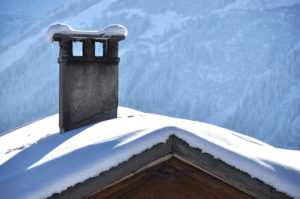 Common Winter Damage
- Chimney Leaks – When water enters the chimney system it can be catastrophic, leading to water damage in the chimney system itself, the fireplace or appliance, and also the rest of the home. The water may enter by a faulty chimney cap, damaged crown, spalling masonry, or dislodged flashing, but the water may travel through the home and form a leak elsewhere, many rooms away from the chimney. Expert tip: have your chimney system inspected annually and waterproofed after repairs so that the masonry is protected from water penetration.
- Spalling Masonry – When the masonry becomes cracked, crumbles, and bricks and mortar pieces begin to fall, this is called spalling. Spalling masonry is extremely dangerous for the chimney and can cause bricks to fall onto and damage the roof and landscaping below as it becomes more serious. Expert tip: have your masonry waterproofed with a deep-penetrating water repellent by Billy Sweet Chimney Sweep to prevent water masonry damage. Schedule a professional to repair your masonry through a process called tuckpointing.
- Crown Damage – Winter weather can wreak havoc on a chimney crown that is old, poorly maintained, and improperly constructed. If a crown is too thin, flat, or made of the wrong materials, water can penetrate it during winter months and then freeze, causing more damage through what’s called the freeze-thaw cycle. Expert tip: ask your chimney professional specific questions about crown construction. It should be constructed with the right materials and design for a lasting crown.
- Dislodged Flashing – Harsh winter temperatures and storms can lead to dislodged flashing. Since the intersection of the chimney and roof is the most vulnerable part of your entire chimney system, dislodged flashing can have serious hazardous results. Expert tip: look at your flashing after strong winds or prolonged ice or snow exposure. Exposed nails, shifted metal, and missing flashing is reason to call a professional right away.
The Freeze-Thaw Cycle
Winter is the most common time for chimney damage that has nothing to do with the fire. Yes, you’re using your fireplace more, but winter damage is caused by outside forces—temperatures, pressures, precipitation, animals, and more. The worst thing that can happen to your chimney during winter months is water penetration. Because masonry is porous by nature, allowing water to penetrate beyond the surface, freezing temperatures can be devastating as the moisture trapped in the masonry freezes and thaws. Water fills the gaps and voids in the masonry, then freezes as temperatures fall. The water expands as it freezes, breaking apart the masonry. Then when a fire is lit or the sun warms the chimney again the water thaws and moves further into the damaged masonry. This process repeats all winter long, causing serious damage in a short time. If this damage isn’t repaired and the chimney waterproofed, the chimney may require a serious repair or rebuild. If the damage remains throughout the spring months, water will have a direct route into the chimney system to make more damage.
Chimney Repairs and Waterproofing in Boston, North Shore, and Portland
Home and business owners in and around Boston, North Shore, and Portland areas continue to depend on Billy Sweet Chimney Sweep for all their ongoing chimney needs, including repairs and waterproofing services. Our goal to keep our friends and neighbors in our service area safe and warm each winter is the reason why we offer expert services like crown repair, tuckpointing, chimney relining, rebuilds, renovations, and more. We also specialize in preventive services such as waterproofing, chimney sweeps, and CSIA inspections.
Our chimney experts are CSIA certified chimney sweeps, experienced master masons, and trained installers. When you hire a Billy Sweet Chimney Sweep you are depending on the best our service area has to offer. We show up with clear ID tags, clean uniforms, and branded company vehicles. You will never second guess your choice in companies or technicians. We keep your home clean of toxins and dirtiness while we work and hand you a written report when the service is complete. If your chimney requires repairs, we provide before and after footage for your own records and to present to your home-owners insurance or realtor. We use a camera system to get up-close-footage during each chimney sweep and inspection and offer a complimentary carbon monoxide test to insure hidden dangers aren’t present.
Schedule Now
We are only just into winter, but damage can occur in a short time. Damage from previous years can go unnoticed, and all you notice as a homeowner is the repercussion. If your fireplace, stove, or chimney is suddenly working improperly, if you notice signs of water damage, or the system works differently in any way, it’s time to have it checked out.
Contact Billy Sweet Chimney Sweep now to schedule important diagnostic services. Call 617-469-4528 today.
by Billy Sweet | Dec 10, 2019 | Gas Inserts vs Gas Logs
So you think you have a gas fireplace? It is fairly simple to figure out whether your fireplace burns gas or not. First, there is not an empty space for logs and fire-building in your firebox. Instead, you’ll find logs—usually ceramic. Your system will be connected to a gas line of some kind and will have an ignitor and pilot light. This is a gas fireplace. What type of gas fireplace you have can be slightly more difficult to figure out. If you don’t have your owner’s manual, it is important to determine what type of system you have. Using the system according to its design is important for safety and efficiency as well as convenience.
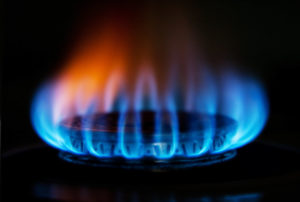 Types of Gas Appliances
Gas is a fuel type that is always growing in popularity due to its convenience and versatility as well as efficiency and cost. You may be able to use gas in any room in your house, but your venting and your space will determine what type of appliance is best for you.
- Gas Stoves – Like all other types of stoves, a gas stove can be freestanding anywhere in a room. It can fit into a corner, in an existing firebox, on any story, and in any sized home or apartment. A professional can install a gas stove anywhere using appropriate refractory materials.
- Gas Fireplaces – A gas fireplace can be accomplished by installing a gas log set into an existing firebox, or installing a manufactured insert into a wall or firebox. Your professional chimney sweep can help you determine which type of gas fireplace is best for your home, your style, and your need.
Gas Inserts V. Gas Logs
Perhaps you don’t have the space for a gas stove or you simply like the appeal of a fireplace more, you can get the same benefits from a gas log set or insert. If your gas fireplace is set into a wall or hearth, it is likely one or the other. If it has glass doors, ceramic logs, and no visible ash or creosote residue, you’re looking at a gas insert or gas log set—not a wood-burning fireplace.
Identifying a Gas Insert
A gas insert is a closed unit, like a stove, but looks like a fireplace. It is retrofitted into an existing firebox or installed directly into a wall. A gas insert may have ventilation that is hidden. It may vent through the ceiling or wall and many draw air the same way, leaving the air in your home undisturbed. A direct vent insert, for instance, has a pipe that draws air in from the outside to help the fire burn. Inside this pipe is the actual flue that vents the toxins from the fire. This allows there to be only on vent and means the air inside the home is continuously cycled and heated and deposited back into the home.
- A gas insert is retrofitted into a traditional masonry fireplace
- A gas insert produces radiant heat and warm air
- A gas insert will often have doors or a closed glass front
- Logs in a gas insert are sometimes rearrangeable (for aesthetics)
- Gas inserts are made with a metal firebox
Identifying a Gas Log Set
A gas log set is convenient for people who would like a fireplace but don’t need it to produce a lot of heat. Gas logs use gas for fuel, but don’t cycle air from the room and continuously heat it. Some gas log sets feature detailed ceramic logs and others are very simple. Some require a vent and others do not. Gas log sets are cheaper than inserts and ideal for converting from a wood-burning fireplace without a lot of costs.
- A gas log set will sometimes have a blue flame
- Gas logs are removable (for cleaning) but have a specific order for optimal use
- Gas logs require an existing fireplace
- Gas logs are usually installed in a masonry fireplace with no special wall or floors
Know Your System for Safety
Part of knowing your system is identifying what type you have but also locating the model number so that you can use it properly. Generally, gas appliance work in the same way—using gas and an ignitor the fire lights, and continuous fuel and airflow allows it to maintain a flame. The toxins produced by the fire are then vented out a flue or if it is a vent-free log set or insert it will require no ventilation and all the heat and moisture from the fire comes into the living space. Using a vented fireplace with no vent is dangerous and can cause permanent injury or death.
If you’re not sure whether your fireplace should be vented or not, it is imperative that you locate the model number and user guide before lighting it. If you cannot locate your model number or user manual, a professional can do this during a standard gas service appointment.
Schedule a fireplace maintenance appointment with Billy Sweet Chimney Sweep and we can help you identify your fireplace. When one of our fireplace experts complete the job, you can rest assured you’re using your fireplace properly and safely.
Call us today at 617-469-4528 if you live in and around Boston.
Call our North Shore number: 781-593-2333.
Call our Portland area number: 207-773-7933.
by Billy Sweet | Nov 7, 2019 | fireplace maintenance
During the season of fuel and fires, ventilation and maintenance, it’s important to not cut corners. Cutting corners when it comes to your fireplace and chimney can result in serious damage to your home, costly services to your chimney system, and even injury and possible loss of life. In order for your chimney to work safely and efficiently all winter long and year after year, it must be maintained properly and used correctly. The National Fire Protection Association (NFPA) and the Chimney Safety Institute of America (CSIA) help to keep fire in its place by educating responsible homeowners to schedule routine chimney sweeps and annual chimney inspections. This ensures the safest and most efficient systems.
The Danger of Dirty Chimneys
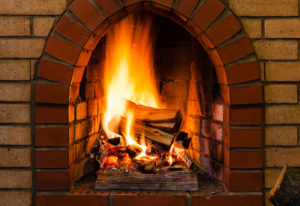 When a fire burns in your fireplace it constantly produces soot and creosote and deposits them into the chimney flue. Soot is merely carbon, harmless unless it’s allowed to buildup and cause an obstruction. Creosote is produced when organic materials are burned and is made up mostly of tar, a sticky, flammable substance. It builds upon itself until a significant buildup occurs, slowing the flow of air through the flue. As efficiency drops, the buildup worsens and hot air begins to stall in the system. As temperatures increase, the creosote boils and the water evaporates leaving a concentrated, hardened mass when the creosote cools. This buildup called “glazed creosote” is highly flammable, obstructs airflow, and is difficult to remove. Because of this, creosote should be removed before it reaches 1/8 inch in thickness. A standard chimney sweep can remove creosote, but glazed creosote requires a special industrial solvent that transforms the creosote as it’s absorbed.
Creosote buildup is not the only danger of a dirty chimney. If your chimney isn’t cleaned on a regular basis the creosote and soot can hide liner damage, allowing the heat to transfer through the masonry and onto the other building materials of the home. This can create a serious fire hazard. Additionally, without a routine sweep, you might have accumulated any number of things in your flue or fireplace. Animals, sticks and leaves, and unburned wood are all things that we find in neglected chimney systems—all contributing to unwelcome odors and ventilation problems.
The Importance of Inspections
It’s so important to have your chimney inspected as well as cleaned that most chimney companies include a basic level one inspection with every cleaning! An inspection will ensure that the system is safe and efficient for another year of use. However, who completes the inspection is vital. Only a certified chimney sweep should inspect your chimney system. An amateur won’t know where to look and a homeowner won’t recognize the signs of a problem until it’s too late. Every chimney should undergo a CSIA inspection annually. This is a complete diagnostic assessment of the chimney from top to bottom. Billy Sweet Chimney Sweep offers level one, two, and three CSIA inspections for homeowners in and around Boston, North Shore, and Portland. Not only do we inspect every chimney that we sweep, but we sweep every chimney we inspect.
If your chimney system hasn’t changed or shown any problems in the last year, our technician will complete a level one inspection. This is an inspection of all the readily accessible portions of the system. The video scan is usually only available for a level two inspection, but we check every chimney with video surveillance. We use a Chim-Scan camera system and Wohler Vis2000-Pro for an inside look at the flue.
A level two inspection is necessary in the following conditions; if there have been changes made to the chimney system, if it’s presented problems, and before the sale or transfer of the property. It includes everything from a level one inspection as well as everything accessible through doors and passageways.
A level three inspection is only necessary when a serious hazard is suspected, but at this point, it is the only thing to get your system up and going again.
Common Chimney Dangers
Besides creosote buildup, there are numerous problems that can arise when a chimney isn’t properly cleaned and maintained. At Billy Sweet Chimney Sweep we diagnose winter damage most often—masonry damage that results in a serious drop in efficiency and rise in fire risk. Another common hazard that we see quite often is a damaged firebox. The firebox is the space that holds the fire. It endures the highest temperatures for the longest amounts of time but gets very little attention. Though many focus only on flue fires, the fire hazard associated with a damaged firebox may be the most serious. Prolonged heat exposure through damaged firebricks can cause structural damage as support beams become brittle with heat damage. A similar danger can arise when the liner is damaged and heat transfers through the masonry. Insulation in walls and attics can ignite as heat moves from the chimney into the home.
As with most residential fires, chimney and fireplace fires can be prevented. It is our goal to help our customers, friends, and neighbors in our service area to stay safer and warmer this winter by offering services that prevent fires.
Schedule your services now by calling 617-469-4528 or schedule an appointment online today.
by Billy Sweet | Oct 23, 2019 | Chimney Cleaning
As temperatures across the country finally drop, leaves are turning and falling little by little. Make sure these leaves aren’t falling into your chimney and clogging it up. One of the best times of the year for your fireplace may also be the worst if you have a flammable obstruction in your flue. Leaves and other organic materials can be a dangerous hazard if your chimney isn’t capped. Call a chimney expert now to make sure your flue opening is protected with a cap.
Protection from the Top Down
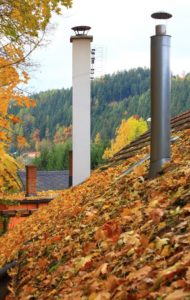 Without a chimney cap, your flue opening is left wide open so that anything can fall or climb right into it. If you have trees hanging above your house, the leaves and limbs can fall directly into your flue, obstructing airflow and leading to serious fire hazards. The cap also protects your chimney from other hazards.
- Chimney Caps Keep Water Out
Your chimney is susceptible to all types of weather if it’s left uncapped. Precipitation can enter year-round, leading to serious water damage whether it’s spring showers, summer storms, winter snow and ice, and more. Protect your chimney system against costly damage by protecting it against water damage with a cap.
- Chimney Caps Keep Other Weather Out
Your fire may be affected by wind if it isn’t capped. If you live in an area of high wind, you can have a special cap installed that moves with the wind instead of allowing it to blow into the flue. This prevents gusts from affecting your flame while a fire is lit and prevents drafts from affecting your central air and heating.
- Chimney Caps Keep Animals Out
Animals don’t just become a bother in the spring. They can enter your chimney in winter too! If the flue is uncapped, anything can get into it that can get onto your roof—birds, chipmunks, squirrels, and even raccoons. Keeps critters from damaging your chimney, leaving debris behind them, and even dying and becoming an obstruction.
- Chimney Caps Keep Sparks In
When your fire burns hot, sparks may rise up the flue and even out the chimney still alight. These sparks can go on to ignite debris on the roof or even dry grasses and brush on the ground. A chimney cap is equipped with a spark suppressant that sends it straight back down the flue.
Don’t light your fire in a dangerous chimney this fall! This is the time for your fireplace to shine, and it can all be ruined when the chimney isn’t capped.
Prevent serious fire hazards by calling the chimney experts at Billy Sweet Chimney Sweep today. Prevent water damage, weather interference, and animal intrusion by trusting the professionals this fall. If you’re not certain that your chimney isn’t free of damage or debris this fall, schedule a chimney sweep or inspection today.
Call 617-469-4528 today or schedule an appointment online.
by Billy Sweet | Oct 9, 2019 | National Chimney Safety Week
Fall is the best time to educate homeowners and the general public about chimney safety because winter is when most fires happen. It’s when you’re using your fireplace or furnace to heat your home that disaster can happen, especially when the chimney isn’t maintained properly. In order for our friends and neighbors in the Boston, North Shore, and Portland area to have safe and efficient fires this burn season, we offer services to keep the chimney working properly and lasting year after year. The Chimney Safety Institute of America (CSIA) is doing its part to make the public aware of chimney risk and safety by planning and promoting National Chimney Safety Week each year.
Safe Chimneys Mean Safe Communities
The National Fire Protection Association (NFPA) and CSIA agree that the safest and most efficient chimneys are those that are cleaned regularly and inspected annually. When a chimney is clean, the air flows more easily, allowing smoke to vent properly. When this process works efficiently, there is less fire risk and less damage to the property and less frequent injuries and deaths due to fire. We believe that even one chimney fire is too many, and we offer comprehensive chimney services year-round to insure that chimneys in our communities are safer. When chimneys and fire appliances are safer, that means our communities are safer. Homeowners in New England count on Billy Sweet Chimney Sweep and have for over 30 years. With a company that puts safety first, makes education and certification a priority, and who offer the highest level of professionalism in the industry, it’s easy to choose Billy Sweet for safer chimneys.
Safer Chimneys Mean Fire Prevention
CSIA has scheduled National Chimney Safety Week for September 29th through October 5th—one week before NFPA’s Fire Prevention Week. Fire Prevention Week and National Chimney Safety Week go hand-in-hand. Fire Prevention Week, running October 6th through 12th is a time for communities to raise awareness about fire prevention and fire preparedness. Not all fires can be prevented, but a little bit of preparation can save lives in the event of a fire. Chimney Safety Week is all about preventing fires, and Fire Prevention Week is all about living through fires!
Fires can occur in more than just chimneys. You can experience an accidental fire in a dorm, hotel or motel, apartment, high-rise condo, manufactured homes, and more. The best way to protect your family and home is to use NFPA’s public education tip safety tip sheets available online. In addition to keeping the chimney, fireplace, furnace, and other heating systems like the dryer maintained properly, it’s important to take other important measures. Install smoke alarms and carbon monoxide detectors. Plan an escape and practice it monthly. Pay attention to problems with your heat systems and alarms. If you’re not sure that your chimney system is working properly, call in the professionals!
Call Billy Sweet Chimney Sweep at 617-469-4528 or request an appointment online to service your chimney and make sure it’s as safe as possible.